Kentucky’s shifting population and what it means for the workforce
Kentucky's population landscape is shifting and understanding where people are headed is important. The Kentucky State Data Center recently released updated population projections through 2050, offering a 25-year look at how communities across the Commonwealth are expected to grow, shrink, and change. For our 7-county KentuckianaWorks region (Bullitt, Henry, Jefferson, Oldham, Shelby, Spencer, and Trimble counties) the projections paint a picture of continued growth alongside important demographic shifts that will shape the region's workforce for decades to come.
Growing, but not evenly
Not every part of Kentucky will share in that growth equally. Among the state's ten workforce development boards, the South Central region leads in percentage growth, projected to expand by 25% over the next 25 years. Projected growth in the Bluegrass, Northern Kentucky, KentuckianaWorks, and Lincoln Trail regions is also expected to outpace the state average. Meanwhile, workforce boards in many rural parts of the state face projected population decline, with the steepest losses expected in the EKCEP region. Fewer people means fewer workers, and rural workforce boards will face growing pressure to do more with less.

KentuckianaWorks: Still the State's Most Populous Region
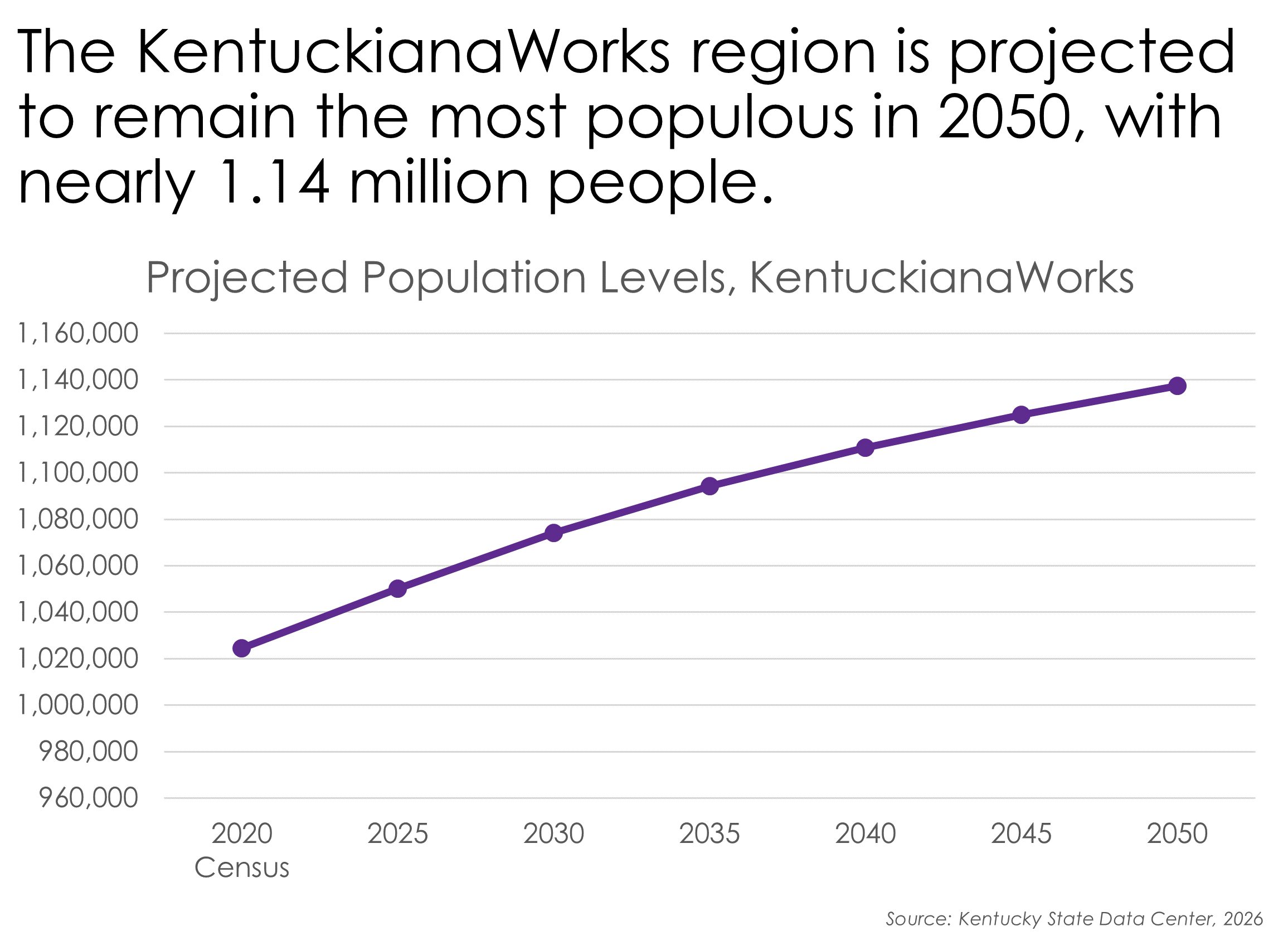
The KentuckianaWorks region is projected to remain the most populous in the state through 2050, reaching nearly 1.14 million people across its seven counties. This is a gain of more than 87,000 people over the next 25 years, the second largest numeric gain among all workforce boards.
Jefferson County anchors that growth, projected to add roughly 40,000 people and surpass 835,000 residents by 2050. The region's fastest growing counties include Shelby, Spencer, and Oldham which are each projected to grow by more than 25%. The one exception within the region is Trimble County, which is projected to lose 13% of its population. Even within a growing region, not every community will feel that growth equally.

Who Will Make Up Tomorrow's Workforce?
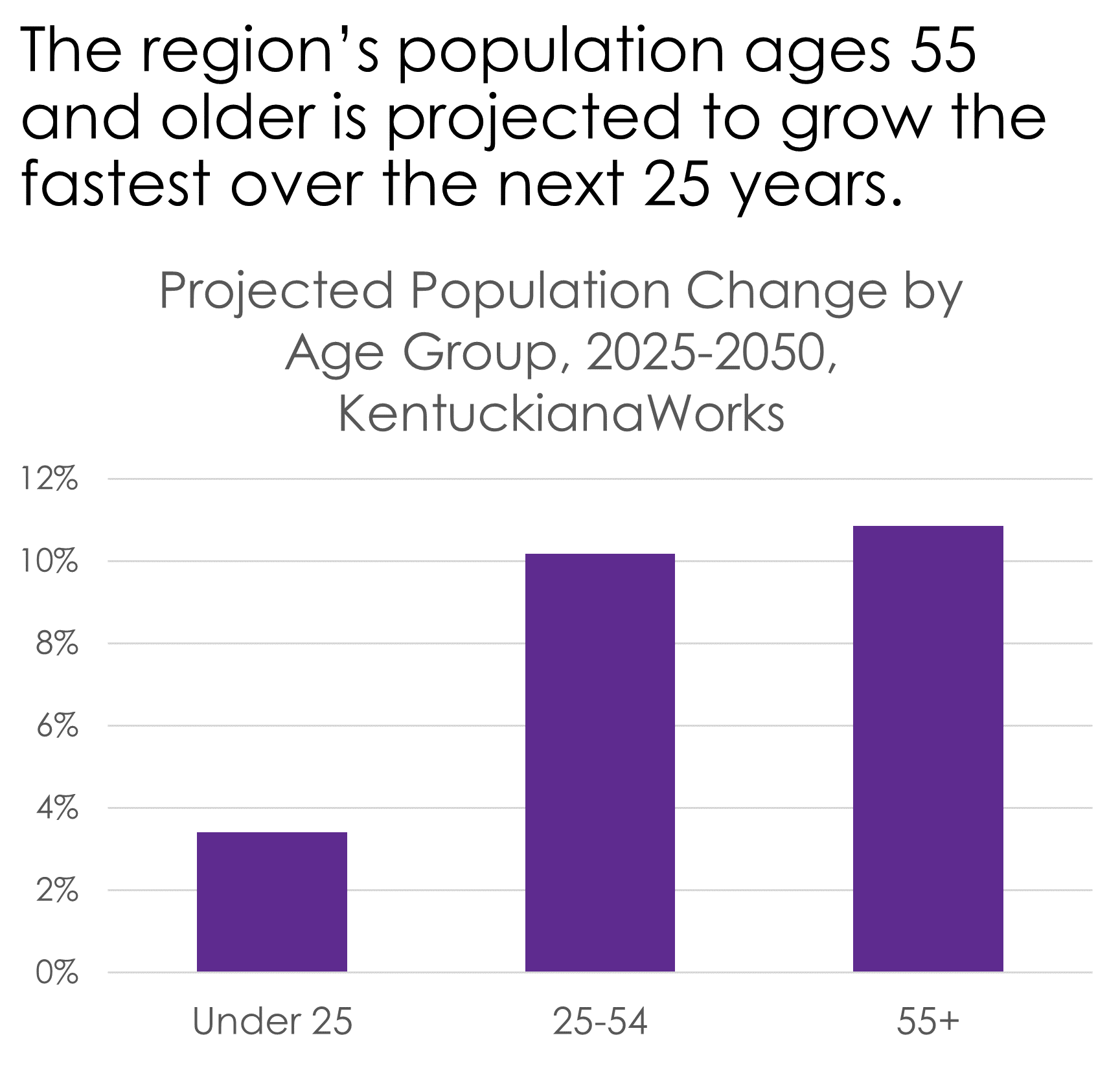
Within the KentuckianaWorks region, the fastest growing age group over the next 25 years will be adults 55 and older, up 11%. Prime working-age adults between 25 and 54 are just behind at 10% growth. The population under 25, however, is projected to grow by just 3%. A smaller youth pipeline puts more pressure on retaining existing workers, attracting talent from outside the region, and supporting older workers who want or need to stay in the workforce longer.
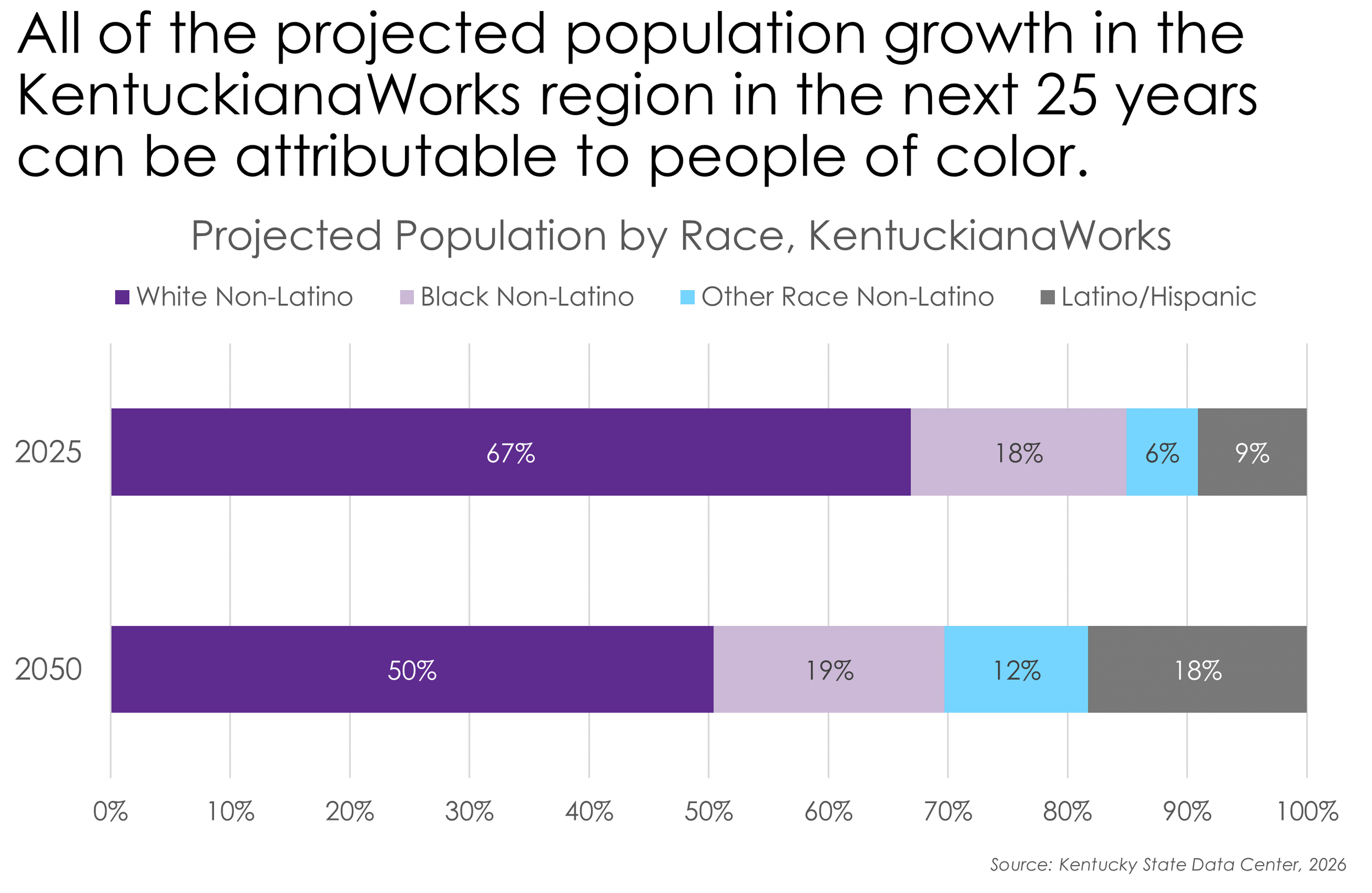
The region's racial and ethnic composition is also set to change dramatically. All of the KentuckianaWorks region's projected growth over the next 25 years can be attributed to people of color. The white population is projected to decline by 18%, while the Latino population is projected to more than double. Tomorrow's workforce will look meaningfully different than today's, and employers, educators, and workforce professionals who start preparing now will be better positioned to compete for that talent.
Planning for the Workforce of 2050
The next 25 years will bring meaningful change to Kentucky's population, and the KentuckianaWorks region is no exception. An older workforce, a more diverse talent pool, and slower gains among younger age groups all signal that employers will need to adapt their strategies for recruitment, training, and retention. The region's projected demographic shifts aren't just a population story, they're a workforce story, and planning for them now will be critical to the region's long-term economic success.